Everything you need for flying with kids for the first time, on a long haul flight, or for the hundredth time – packing, sleep tricks, screen-free entertainment, and the insider secrets flight crews don’t usually tell you.
The first time I flew with my own kid, I packed like I was preparing for a NASA mission. Snacks for three flights, not one. A backup outfit for every possible bodily function. A folder of “emergency activities” that I never even opened because she was too busy staring, wide-eyed, at the seatback in front of her.
And you know what actually saved that flight? None of it. It was a packet of fruit snacks and a window seat.
Here’s the thing nobody tells you before your first flight with kids: almost every child gets antsy on a plane, and almost every parent feels like they’re the only one who can’t handle it. A survey of US travelers found that 70% of kids under 2 get restless within the first two hours of a flight, and that number is 57% for kids ages 3 to 10. So if your toddler melts down somewhere over Ohio, you are not failing. You are just… flying with a toddler.
What actually changes the outcome isn’t willpower or the perfect Pinterest-worthy busy bag. It’s a handful of specific tricks that real parents (and real flight crews) have tested over hundreds of flights. I pulled together the best of everything that’s out there, tested against real parent experiences, and added in what nobody else seems to be saying. This is the one you bookmark before every trip.
A quick note before we dive in: you won’t find tablet recommendations or screen-time hacks in this guide. There’s nothing wrong with a movie on a long flight if that’s your thing, but this list is built entirely around things that work without a screen – because that’s usually the part parents are actually trying to figure out.
Part 1: The Day(s) Before You Fly (This Is Where Most Trips Actually Go Wrong)
Most flying-with-kids disasters don’t start at the gate. They start three days earlier, when nobody double-checked something simple.
Recheck your flight time 24-48 hours out.
Schedules change more than you’d think, especially on international routes, and nothing wrecks a trip faster than showing up at 6pm for a flight that left at 6am. Use the airline’s app to keep an eye on delays too.
Reconfirm your seat assignments.
Airlines “lose” seat assignments more often than they should, especially after aircraft swaps. If you’re hoping to sit together, or you requested an airplane bassinet for a lap baby, call and double-check about 24 hours before departure – that’s also when many upgrades clear, freeing up seats to fix any mix-ups.
Check in the moment it opens.
Most airlines open check-in 24 hours before departure. Do it immediately – on Southwest specifically, your boarding number is based on check-in order, which directly affects how good your seat options are.
Look at the weather.
Not just at home – check your departure city, destination, and any layover airport. A storm three states away can cancel your connection before you’ve even left your driveway.
Map out your airports in advance.
Does your airport have a family security line? What’s the bag-drop cutoff? Will your connection require you to exit and re-enter security? These tiny details are the difference between a calm travel day and a sprint through the terminal with a toddler under one arm.
Plot twist: Many larger airports require checked bags to be dropped off a full hour before domestic departure – not at the gate, at the counter. People miss flights over this constantly.
Part 2: Packing – What Actually Earns Its Spot in Your Carry-On
Forget the 40-item packing lists. Here’s what genuinely pulls its weight, organized by what it’s actually for.
The “keep them comfortable” basics
Extra outfit (for them and you – pack one shirt for yourself too, trust me)
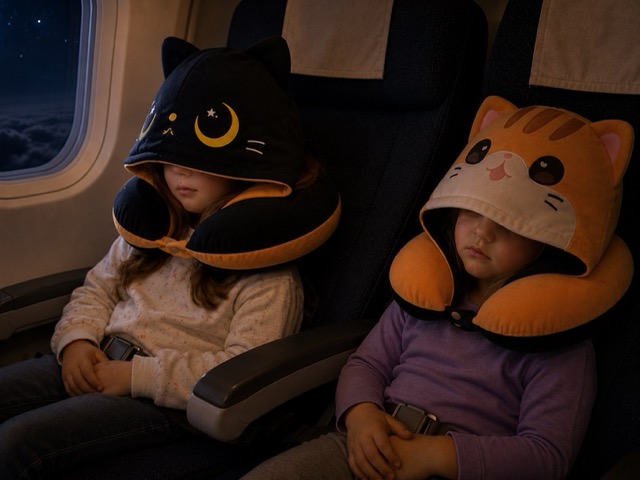
Travel pillow and a packable blanket – this blanket fits on my suitcase handle perfectly so nothing extra to carry
Reusable water bottle (empty through security, fill after)
Magnetic travel tiles or magnetic game sets – the pieces don’t roll under the seat in front of you
little magnetic figures – the little tin they come in is honestly genius for travel. We grabbed ours specifically for flights and it’s given us endless fun ever since, my kids could play with these for an entire flight without getting bored.
A small “surprise bag” – a few cheap, wrapped trinkets they only get to open mid-flight (more on this below, it’s a game changer)
A printable airplane bingo or scavenger hunt sheet
Audiobook or kids’ podcast downloaded in advance, with headphones – we’re big Audible fans in our house, they have a huge library of kids’ audiobooks, and honestly, my husband and I usually end up finding something great for ourselves too. It’s worth browsing a few days before your trip and lining up some picks in advance, so if things get restless mid-flight, you can just hit play instead of scrambling to find something.
The “make sleep possible” gear
An inflatable footrest for long-haul flights (window or middle seat only – most airlines don’t allow them on the aisle).
This pair of inflatables was a huge help during a fly to Europe with our kids. They were easy to inflate and deflate. I highly recommend them.
Image generated with artificial intelligence
Yogasleep Hushh Portable White Noise Machine – compact, battery-powered, and genuinely useful for blocking out engine noise and unfamiliar cabin sounds at nap time
Plot twist: A lot of frequent-flying parents specifically avoid the bulkhead row for overnight flights with kids. The armrests usually don’t lift, which makes it much harder for a child to stretch out and actually fall asleep.
Part 3: Surviving the Airport (Yes, This Counts as Part of the Flight)
The airport isn’t just a waiting room – it’s your best tool for a calmer flight.
Let them run.
Seriously, don’t fight it. Skip the stroller for a few minutes if you can and let your child burn energy walking, climbing chairs (within reason), or playing “spot the airplane” at the window. A tired kid is a kid who’s far more likely to settle down once you’re in the air.
Use the family line if there is one.
Many airlines offer a family check-in or security line – ask, don’t assume there isn’t one.
Board as early as your airline allows.
Most carriers offer early boarding for families with young kids. Use it. It buys you time to get settled without an audience and without rushing.
Snack-spread, don’t snack-dump.
Instead of handing your child the whole snack bag in one go, dole it out in phases throughout the flight. Each new snack becomes its own mini “activity” and gives them something to look forward to.
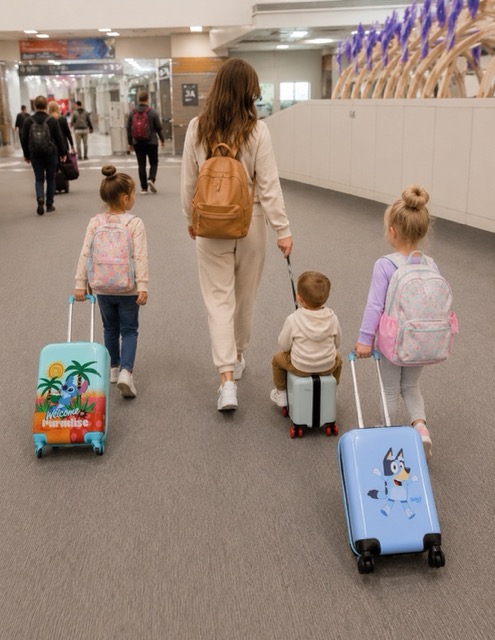
Let them pull their own suitcase.
What child doesn’t want to roll their own suitcase on vacation! This is the real deal!
Image generated with artificial intelligence
If there’s one packing upgrade that’s genuinely worth it, it’s a kids’ rolling suitcase with a character they love on it. We’re talking Stitch, Bluey, you name it. Something magical happens when a kid gets to roll their own bag through the airport instead of being dragged along by yours. Suddenly they’re walking faster, not slower, and you’ve got one less thing hanging off your shoulder.
Our top 3 favorite suitcases (pictured above)so far are:
Stitch kids rolling suitcase (other character designs are also available) – the wheels spin a full 360°, which makes a real difference when your child is the one steering through a crowded terminal. One mom said it’s “the real deal,” great wheels, durable, and her daughter navigated the whole airport on her own without a single struggle.
Bluey kids rolling suitcase (other character designs are also available) – same story, same character-magic effect, and it holds up just as well to the wear and tear of actual travel days, not just a trip around the living room.
And if you’ve got a toddler too young to walk the whole terminal but too big to carry, the ride-on suitcase is honestly a game changer. It fits kids from about 2.5 years and up, with plenty of room to grow into. It’s saved us on more than one long travel day, it tucks perfectly into the overhead bin on major airlines, and I’ve actually had other parents stop me in the airport asking where I got it. My toddler rides, I push, and my hands stay completely free. Worth every penny, especially after one too many terminals spent dragging a tired toddler behind me.
Part 4: Screen-Free Things That Actually Work Mid-Flight
This is the section most articles get wrong – they either give you a vague “bring some toys!” or they lean entirely on a tablet. Here’s what genuinely holds a kid’s attention in a window seat, broken down by type.
Image generated with artificial intelligence
Watch-and-wonder activities (zero prep, zero supplies)
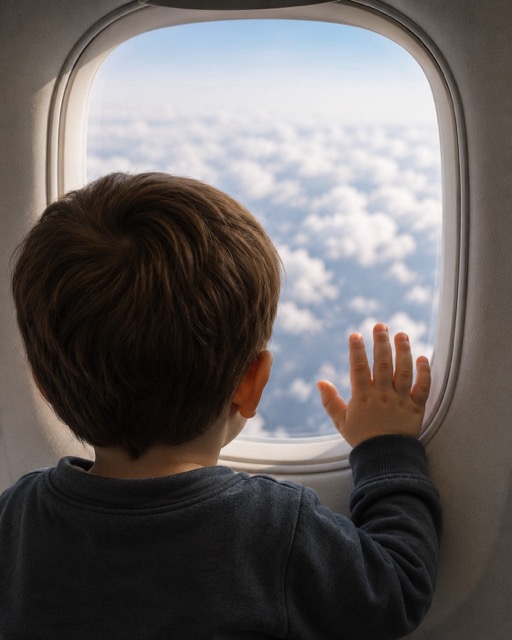
Cloud watching – ask what shapes they see
Spotting rivers, coastlines, or cities as you descend
Following the flight progress on the seatback map (if your plane has one)
Plane-spotting out the window during taxi and boarding
Quiet seat activities
Free drawing in a small notebook
A travel journal where they record one thing from the trip each day
Sticker books
Reusable drawing tablets
Magnetic building toys
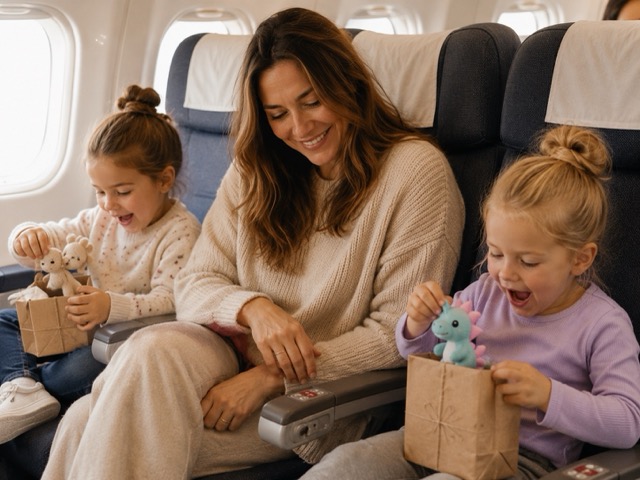
The “surprise bag” trick
Prepare a small bag of inexpensive, individually wrapped items – stickers, a tiny toy, a mini puzzle – and let your child open one every hour or so during the flight. The wrapping paper itself becomes part of the entertainment, and spacing it out makes the flight feel shorter because there’s always “something coming.” Unwrapping it becomes part of the fun, not just the toy itself.
Movement breaks
A short walk up and down the aisle (when the seatbelt sign is off) genuinely resets a restless kid. This works especially well after meal service or about halfway through a long flight.
Listening activities
Audiobooks or a downloaded kids’ podcast through headphones are a brilliant in-between option – calming, screen-free, and great for that pre-nap window when your child isn’t quite tired enough to sleep but is done with active play.
Part 5: How to Actually Get a Kid to Sleep on a Plane
This is the single most-requested topic for a reason – a sleeping child changes everything about a flight.
Image generated with artificial intelligence
Tire them out beforehand. Skip the stroller at the airport and let them move.
Follow your normal bedtime routine, just smaller. Wipe them down, change into pajamas, read a book, same order as home.
Get them full first. A satisfied stomach plus the steady hum of the engine is a surprisingly effective sleep combo.
Create a dark, enclosed space. Close the window shade, dim the area, and drape a blanket from the seatback to the tray table to block cabin light.
Use an inflatable footrestto let them lie flat across the seat (window/middle seat only, and always keep them buckled). was a huge help during a fly to Europe with our kids. They were easy to inflate and deflate. I highly recommend them.
Image generated with artificial intelligence
6. Try babywearing for little ones. Walking the aisle with baby in a carrier often works when rocking in the seat doesn’t. (Just remember babies can’t stay in a carrier during takeoff or landing.)
7. Pick your seats strategically. A row of seats together away from the bathroom (but not too far) makes a real difference on overnight flights.
8. Bring a portable white noise machine. Consistent background sound masks sudden cabin noises that tend to wake light sleepers. Yogasleep Hushh Portable White Noise Machine is compact, battery-powered, and genuinely useful for blocking out engine noise and unfamiliar cabin sounds at nap time
9. Don’t force it. Some flights, your kid just won’t sleep. Let them be comfortable and entertained instead – fighting it usually makes things worse for everyone.
Part 6: Things Most Parents Don’t Know (Straight From Cabin Crew)
Image generated with artificial intelligence
A few details that came directly from airline crew interviews and frequent flyers, and that genuinely surprised even experienced travelers:
If your child is under 2 and flying on your lap, crew can provide a special seatbelt extender that loops your seatbelt and theirs together – ask for it.
Crew can often provide changing-table access, basic infant supplies (diapers, wipes, formula), and will heat up a bottle or baby food on request – you usually just have to ask.
On many airlines, you can request a polaroid photo with a crew member to mark the moment – a nice freebie almost nobody asks for.
Bassinets for lap infants exist on most long-haul international flights, but the request gets “lost” more than you’d expect – call ahead, then confirm again at check-in.
A short walk during calm moments (not during turbulence, obviously) is something crew actively recommend, not just tolerate.
Part 7: Long-Haul & Overnight-Specific Tips
Long flights are their own animal. A few extra things that make a real difference over 6+ hours in the air:
Image generated with artificial intelligence
Pack a full change of clothes for everyone, including you – turbulence with a drink, motion sickness, and overnight flights are not a great combination to be unprepared for.
Bring more snacks than you think you need, plus one “just in case” easy meal if your child is a picky eater and the inflight meal is a gamble.
Split your entertainment into rounds instead of laying it all out at once – drawing, then a snack, then a walk, then a story, then sleep attempt. Pacing beats quantity.
If you’re traveling solo with more than one child, ask at check-in about priority boarding and seating together – most airlines will actively help rearrange seats so a solo parent isn’t split from their kids.
Looking for even more ideas?
In my other post, you’ll find a whole bunch of activities broken down by age for kids 1 to 12, total game changers that give me a calm, peaceful flight every single time. I’d also take a peek at my Car Activities post, where I’ve rounded up over 70 different activities for kids on a road trip, most of which work just as well up in the air as they do on the road.
❓ Quick Answers to What Everyone Actually Asks
Is it normal for my toddler to cry or act up on a flight? Yes, genuinely normal – most kids under 5 get restless at some point during a flight, and most parents you see around you are dealing with the exact same thing, even if it doesn’t look like it.
What’s the single best thing to bring for ear pressure? Something to suck or swallow during takeoff and landing – a pacifier, a bottle, a lollipop, or a sippy cup all work because the swallowing motion helps equalize pressure.
Should I give my child medicine to help them sleep on the plane? It’s not recommended. Medications like Benadryl can have the opposite effect in some kids and aren’t a reliable or safe sleep tool for flying.
How do I keep a toddler entertained without a tablet? A rotation of small, low-effort activities – drawing, sticker books, a surprise bag, window watching, and a short walk – tends to outlast any single toy or activity used alone.
What if my child just won’t sleep on an overnight flight? Let it go. Keep them comfortable and occupied instead of fighting for sleep that isn’t coming – many kids do fine on very little sleep for one travel day and catch up once you land.
You’ve Got This
Flying with kids is never going to be effortless, and anyone who tells you otherwise is probably not counting the snack wrappers under their seat. But it is absolutely doable, and most of the magic is in small, boring-sounding preparation rather than some elaborate hack.
Pack a little light on stuff and heavy on flexibility, and you’ll land in better shape than you expect.
To provide the best experiences, we and our partners use technologies like cookies to store and/or access device information. Consenting to these technologies will allow us and our partners to process personal data such as browsing behavior or unique IDs on this site and show (non-) personalized ads. Not consenting or withdrawing consent, may adversely affect certain features and functions.
Click below to consent to the above or make granular choices. Your choices will be applied to this site only. You can change your settings at any time, including withdrawing your consent, by using the toggles on the Cookie Policy, or by clicking on the manage consent button at the bottom of the screen.
Functional
Always active
The technical storage or access is strictly necessary for the legitimate purpose of enabling the use of a specific service explicitly requested by the subscriber or user, or for the sole purpose of carrying out the transmission of a communication over an electronic communications network.
Preferences
The technical storage or access is necessary for the legitimate purpose of storing preferences that are not requested by the subscriber or user.
Statistics
The technical storage or access that is used exclusively for statistical purposes.The technical storage or access that is used exclusively for anonymous statistical purposes. Without a subpoena, voluntary compliance on the part of your Internet Service Provider, or additional records from a third party, information stored or retrieved for this purpose alone cannot usually be used to identify you.
Marketing
The technical storage or access is required to create user profiles to send advertising, or to track the user on a website or across several websites for similar marketing purposes.
To provide the best experiences, we use technologies like cookies to store and/or access device information. Consenting to these technologies will allow us to process data such as browsing behavior or unique IDs on this site. Not consenting or withdrawing consent, may adversely affect certain features and functions.
Functional
Always active
The technical storage or access is strictly necessary for the legitimate purpose of enabling the use of a specific service explicitly requested by the subscriber or user, or for the sole purpose of carrying out the transmission of a communication over an electronic communications network.
Preferences
The technical storage or access is necessary for the legitimate purpose of storing preferences that are not requested by the subscriber or user.
Statistics
The technical storage or access that is used exclusively for statistical purposes.The technical storage or access that is used exclusively for anonymous statistical purposes. Without a subpoena, voluntary compliance on the part of your Internet Service Provider, or additional records from a third party, information stored or retrieved for this purpose alone cannot usually be used to identify you.
Marketing
The technical storage or access is required to create user profiles to send advertising, or to track the user on a website or across several websites for similar marketing purposes.