No fancy setups. No Pinterest-perfect sensory bins. Just real things that work.
Last week my toddler pulled every single sock out of the clean laundry basket, lined them up across the living room floor like tiny soldiers, and then looked at me like I was supposed to know what happened next. I did not know what happened next. I just stood there holding a coffee that had gone cold an hour ago, wondering how one small human could generate this much chaos before 9 a.m.
If that sounds like your Tuesday, you’re in the right place.
Here’s a fact that might make you feel better (or worse, depending on how your morning is going): searches for sensory play ideas have jumped over 1,000 percent in the past year alone. Translation: every parent you know is standing in their kitchen right now googling “what do I do with this child” too. You are not behind. You are not doing it wrong. You just need a list that actually works, made from stuff you already own.
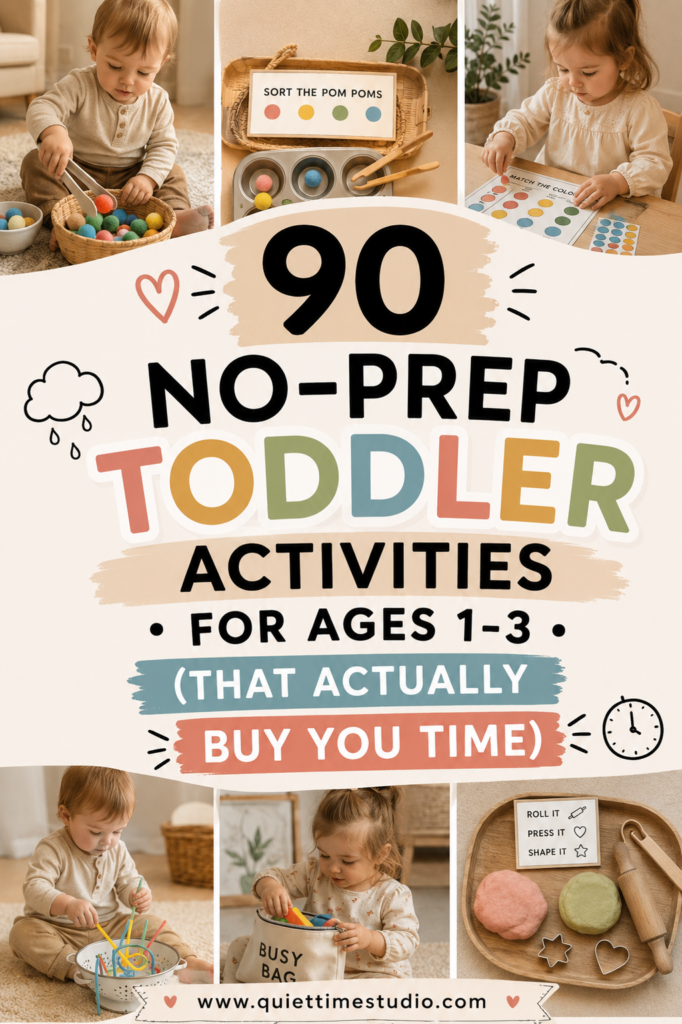
That’s exactly what this is. No special toys, no trip to the craft store, no setup that takes 45 minutes to prep for 4 minutes of play. Just 90 real toddler activities for ages 1 to 3, organized so you can find exactly what you need in exactly the moment you need it.
🏠 No-Prep Toddler Activities Using Things You Already Own
These are the ones you can start in under 2 minutes with whatever’s already lying around the house. Perfect for the “I need something RIGHT NOW” moments.
Sock matching game. Dump the clean laundry basket and let your toddler find the pairs. They’ll think it’s a game. You’ll think it’s chore outsourcing. Everybody wins.
Image generated with artificial intelligence
2. Tupperware lid matching. Pull out every container and lid you own, mix them up, and let your toddler match them back together. Builds problem-solving and keeps little hands busy way longer than you’d expect.
3. Muffin tin transfer. A muffin tin (or an empty egg carton), a handful of dried beans, pasta, or buttons, and a pair of kid-safe tongs (fingers work too) equals 20 minutes of focused fine motor practice.
Image generated with artificial intelligence
4. Card slot drop. Cut a slit in the top of an empty oatmeal container and let your toddler drop in old playing cards, dump them out, and do it all again. Strangely hypnotic for both of you.
5. Stacking cup towers. However high they build it, they’ll want to knock it down. Then build it again. Repeat until you’ve finished that cup of coffee.
6. Wooden spoon drum kit. Pots, pans, a wooden spoon. That’s it. Bonus points for you if [AFFILIATE LINK: noise-canceling headphones] happen to be nearby.
7. Which hand? Hide a small toy in one closed fist, shuffle your hands behind your back, and let your toddler guess which one it ended up in. Zero supplies, maximum giggles.
8. Bubble wrap stomp. Tape a sheet of bubble wrap to the floor and let them stomp, jump, and pop their way through ten minutes of pure joy.
9. Pasta necklace threading. Uncooked penne or rigatoni and a shoelace with a knot tied in one end. Great for concentration and grip strength.
Image generated with artificial intelligence
10. What’s missing game. Line up 4-5 toys, let your toddler study them, then hide one while their eyes are closed. Can they guess what’s gone?
11. Empty box explorer. Any big cardboard box becomes a car, a boat, a house, or a hiding spot. Cut a window in the side and watch what happens.
12. Spray bottle plant watering. Fill a small spray bottle with water and let them “water” the plants, the windows, or just the patio. Endlessly satisfying.
13. Sticker peel-and-stick. A cheap sheet of dot stickers and a piece of paper buys a solid 15 minutes of fine motor focus.
14. Tape road. Whatever tape you’ve got lying around (painter’s tape, washi tape, even regular tape) in loops and lines across the floor turns any room into a racetrack for toy cars.
15. Ice cube melting race. Two ice cubes, two saucers, one simple question: which one melts faster if we breathe on it versus rub it with our hands?
16. DIY shape puzzle. Trace random household objects (a cup, a fork, a book) onto cardboard, cut out the shapes, and let them match each real object to its outline.
🤫 Quiet & Mess-Free Toddler Activities
For the moments you need calm. Car rides, waiting rooms, or that golden 20 minutes before bedtime when nobody needs more chaos.
17. The quiet bin. Rotate 5-6 toys into a bin that only comes out during quiet time. Old toys feel brand new again just by disappearing for a week.
18. Dry erase bag scribbles. Fill a zip-top bag with hair gel and a pinch of glitter, seal it tight, and let your toddler trace shapes with one finger. Zero mess, endless doodling.
19. Sticker dot sorting. Stick a row of colored dot stickers on the table and let your toddler peel matching colors and line them up. Quiet, focused, oddly soothing to watch.
20. Magnetic letter slide: Your fridge door plus a magnetic letter set lets your toddler slide, sort, and snap letters together right at toddler height, no cookie sheet needed.
Image generated with artificial intelligence
21. Felt board storytime. Cut a few simple shapes from felt and let them stick onto a felt board while you tell a story together.
22. Sticker book. A dollar-store sticker book buys more quiet minutes than almost anything else on this list. Keep a fresh one in your bag at all times.
Image generated with artificial intelligence
23. Lacing cards. Punch holes around the edge of a piece of sturdy cardboard or grab a ready-made wooden lacing card set and let your toddler weave a shoelace or yarn through them.
Lacing beads and pattern cardslets your toddler thread colorful beads while following simple patterns straight off the included cards. Great for fine motor skills, and a sneaky first step toward pattern recognition. Best for ages 3 and up.
Image generated with artificial intelligence
24. Crayon rubbing discovery. Tape a textured object (a leaf, a coin, a key) under a sheet of paper and let your toddler reveal the hidden pattern by rubbing a crayon over it.
25. Window painting with water. A paintbrush and a cup of water on a window or chalkboard means “painting” that disappears the second it dries. No stains, ever.
26. Photo album browsing. Old family photo albums are basically a toddler’s favorite picture book, and they’ll flip through one for way longer than you’d guess.
27. Busy bookI chose this one because it has letters, “hands” for learning to count, and animals, as well as shapes, colors, a clock, and buckles, buttons, and ties. Our toddler loves it, and brings it everywhere in the car, doctor’s office, etc.
Image generated with artificial intelligence
28. Sandpaper coloring. Old or broken crayons plus a sheet of sandpaper. The texture under their hand keeps attention locked in a way plain paper doesn’t.
Image generated with artificial intelligence
29. Get Well Doctor Kit.Fantastic pretend-play set! This kit has everything kids need to play “doctor” for real. The pieces are sturdy, realistic, and easy for little hands to use, and the 25 accessories keep them busy and imaginative.
30. Audiobook listening.Amazon Audible has thousands of audiobooks for kids, including plenty made just for the littlest listeners. Pick a short one, play it on a kid-safe speaker, and enjoy genuine quiet, even if they’re just lying on the floor staring at the ceiling the whole time.
31. Coloring with a twist. Tape paper to the underside of the coffee table and let them color lying on their back. Same activity, suddenly a hundred times more interesting.
🏃 Indoor Gross Motor Activities (For Burning Off That Energy)
When the weather’s bad or it’s just too close to bedtime to go outside, these get the wiggles out without leaving the living room.
32. Balloon keep-up. Hit a balloon up into the air and see how many times you can keep it from touching the ground.
33. Jumping over lines. Tape a few lines on the floor like a mini ladder and challenge your toddler to jump from one to the next.
34. Indoor & Outdoor obstacle course. My toddler loves these. The build quality is great and they support my weight as an adult. The tops of each beam are non-slip which is a must for stocking feet, and they are easy on wood floors. Rearrange it and it’s brand new again tomorrow.
Image generated with artificial intelligence
35. Freeze dance. Put on music, dance like maniacs, and freeze the second it stops. Repeat until everyone’s out of breath (mostly you).
36. The floor is lava.These stepping stones are a hit. It’s a giant interactive balance and coordination set that somehow turns my two-year-old niece into a tiny ninja warrior overnight. Jumping, hopping, balancing, and dramatically not touching the floor – hours of entertainment unlocked.
Image generated with artificial intelligence
37. Animal walks. Crawl like a bear, hop like a frog, slither like a snake. Whole-body silliness that tires them out fast.
Image generated with artificial intelligence
38. Bean bag toss. We have had so much fun with the Coney Island Toss Board. We have played over and over again with ranging ages of 3 years to 70 years. Quality of frame is excellent as are the bean bags.
40. Pillow fort building. Let them stack, drag, and rearrange every cushion in the house into a fort. The building is half the workout.
41. Indoor snowball fight. Balled-up socks make perfect “snowballs.” Pull out furniture for hiding spots and let the chaos begin.
42. Hopscotch on tape. A simple hopscotch grid taped to the floor works just as well indoors as on the sidewalk.
43. Simon says. “Simon says jump three times” is a classic for a reason: it gets bodies moving and brains listening at the same time.
44. Mirror movements. Stand face to face and take turns copying each other’s movements. Bigger movements, bigger giggles.
45. Ball wall toss. Stick a few soft balls to the wall with painter’s tape, then race to grab them and drop them into a basket across the room.
Image generated with artificial intelligence
46. Dance party with props. Add dance ribbons or scarves to your usual dance party and watch focus (and energy burn) go up instantly. Bought these for birthday party and the kiddos loved them!
💧 Sensory Toddler Activities
Squishy, scoopable, pourable fun that keeps little hands and minds busy at the same time.
47. Rice bin scoop and pour. Dye a bag of rice with a little vinegar and food coloring, then fill a sensory bin starter kit for endless scooping. I love this sensory bin! The giant picture map with all the animals is a plus. Everything fits neatly inside the case. The kinetic sand is great molding quality. My son loves all the little animal figurines and really enjoys identifying each animal!
Image generated with artificial intelligence
49. Shaving cream cloud art. Spread shaving cream on a tray (mixed with a little glue so it doesn’t drip) and let them swirl it with their fingers.
50. Frozen toy excavation. Freeze a few small toys in a container of water and hand your toddler a spoon or a child-safe hammer to dig them out.
51. Colored ice melting. Freeze water with food coloring in ice cube trays, then let your toddler push the melting cubes across a tray of paper to watch the colors mix.
52. Pretend kitchen play. A kids baking and cooking set buys you many calm moments, because once your toddler has their own apron, rolling pin, and whisk, they can “cook” right alongside you in the kitchen, stirring, rolling, and decorating their own pretend dishes for as long as you need.
Image generated with artificial intelligence
53. Cloud dough. Mix flour with a little baby oil for a moldable, taste-safe “dough” that doesn’t dry out or crumble like regular play dough.
54. Pasta sensory bin. Dry pasta of different shapes in a bin with cups and a colander makes scooping and pouring endlessly satisfying.
55. Sink or float station. Fill a bin with water and a basket of small household items, then let your toddler test which ones sink and which float.
56. Texture walk. Line up a row of trays with different textures (sand, water, bubble wrap, dry rice) for bare feet to explore one at a time.
57. Bath paint. Mix a little cornstarch with food coloring and shaving cream for paint that washes off the tub (and your toddler) in seconds.
58. Sound shaker bottles. Fill a few clean bottles with rice, beans, or bells and seal the lids tight for instant musical shaking fun.
59. Snow in a bowl. Mix shaving cream and baking soda for a fluffy, cool, taste-safe “snow” that’s fun to scoop year-round.
Image generated with artificial intelligence
60. Color sorting bowls. Dump a bin of mixed objects, or grab a ready-made wooden color sorting bowl set, and let your toddler sort everything. This is awesome toy! This is the longest my very active 18 month old boy has spent playing with any toy. He loves it! And I was so impressed to see his motor skills developing so quickly holding the wooden spoon.
61. Nature texture tray. Bring a few leaves, pinecones, and smooth stones inside for a tray of textures straight from your own backyard.
🧠 Independent Play Ideas (Buy Yourself Real Time)
These are the ones designed to keep your toddler happily occupied while you do literally anything else: dishes, a work email, or just five quiet minutes.
61. Rotate the toy shelf. Keep only 4-5 toys out at a time and rotate the rest into storage. Less choice means deeper, longer focus.
63. Set up a “shop.”The Wooden Ice Cream Counter Playset is an absolute delight! The set provide endless opportunities for imaginative play, and my toddler absolutely loves pretending to run her own ice cream shop. The wooden pieces are sturdy, well-crafted, and painted with vibrant, non-toxic colors. The attention to detail, like the scoops and toppings, is fantastic, making the play experience even more engaging. Very good size for a toddler!
Image generated with artificial intelligence
64. Water painting on the fence. A bucket of water and a paintbrush on an outdoor wall or fence keeps them “painting” for ages, with zero cleanup.
65. Box of fabric scraps. Old scarves, fabric, and ribbons in a basket become capes, blankets, and nests for stuffed animals, all on their own.
66. Dump truck and gravel bin. A small bin of dried beans or rice and a toy dump truck can run on repeat for a surprisingly long stretch.
Image generated with artificial intelligence
67. Lego DUPLO.Legos are by far one of the best toys a kid could ever have. And this set is the perfect way to start playing with legos. The square blocks are the perfect ones to get introduced to. They are good to hold for those tiny hands and really easy to build and rebuild again and again.
68. Mailbox drop game. Cut a slot in a shoebox “mailbox” and give your toddler a stack of old cards or envelopes to post, one at a time.
69. Personal music station. A toy keyboard or a set of drums (even pots and a spoon) set up in their own corner buys you genuine independent time.
70. Toy car wash. A shallow tub of soapy water, a toothbrush, and a basket of toy cars equals independent play with a satisfying “clean” result.
71. Puzzle tray. A wooden toddler puzzle set displayed on its own tray, away from other distractions, holds focus far longer than puzzles tossed in a toy bin.
Image generated with artificial intelligence
72. Pretend laundry station. A small basket, a few washcloths, and child-sized clothespins let your toddler “do laundry” for a surprisingly long time.
Image generated with artificial intelligence
73. Stacking cups tower. My son absolutely loves playing with the Moonkie Children’s Silicone Stackable Cubes! They keep her entertained for long stretches, and it’s wonderful to watch him explore, stack, and knock them down again.
The silicone is soft, safe, and easy for little hands to grip, which gives me peace of mind.
74. DIY busy board. Screw a few latches, switches, and zippers onto a board for endless solo fiddling and exploring.
75. Window decal play. Reusable window clings or gel decals let your toddler create and recreate “art” on the window, no supervision required.
76. Sticker wall. Tape a large sheet of paper to a low wall and hand over a roll of stickers. They’ll happily decorate it for ages, completely on their own.
🌳 Quick Outdoor Toddler Activities
For the days you just need everyone outside, fast, with zero setup time.
77. Chalk obstacle course. Draw lines, circles, and shapes on the driveway with sidewalk chalk for jumping, hopping, and balancing.
78. Water table free play. Fill a bin or kiddie pool with a few inches of water and a handful of cups for endless scooping and pouring.
79. Bubble chase. I bought this Bubble Lawn Mower for my 2-year-old, and it has been an absolute hit! The moment we turned it on, he couldn’t stop laughing and running around chasing bubbles. The mower is lightweight and easy for little hands to push, and the bubbles come out continuously – perfect for keeping toddlers entertained outdoors.
Image generated with artificial intelligence
80. Nature scavenger hunt. A short list of things to find (a rock, a leaf, something yellow) turns a backyard walk into a mission.
81. Toy wash station. A bin of soapy water, a sponge, and a basket of muddy toys means happy scrubbing and an actual clean-up bonus for you.
Image generated with artificial intelligence
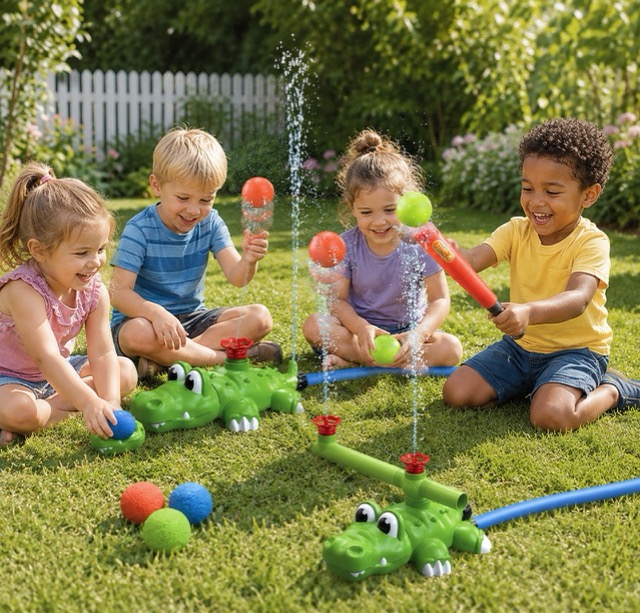
82. Water Sprinklers. If you’re looking for the one gift that’ll actually get played with all summer long, this is it: it’s been the best summer gift ever! From the moment we set it up in the backyard, kids were completely hooked. The toy offers so many fun ways to play that it never gets boring. They’re practicing their baseball swing one minute and having a full-blown water battle the next!
83. Sidewalk chalk paint. Mix cornstarch, water, and food coloring for a paint that’s taste-safe and washes right off the pavement.
84. Backyard treasure hunt. Hide a few small toys around the yard and let your toddler search them out one by one.
85. Pinwheel run. A simple pinwheel teaches cause and effect (running makes it spin faster) while burning serious energy.
86. Rock painting. Collect rocks from outside, dry them off, paint them with bold designs. Hide them around the neighborhood when it clears up. I’ve been using these markers for over 3 months now and they’re vibrant every time. They work on multiple surfaces, including stones and air dry clay.
Image generated with artificial intelligence
87. Leaf and stick collage. Collect leaves and sticks on a walk, then glue them onto paper for a nature collage once you’re back inside.
88. Mud kitchen play. Old pots, a wooden spoon, and a patch of dirt is genuinely one of the longest-running activities on this entire list.
89. Garden hose limbo. A gently running hose held low becomes a limbo bar for soggy, giggly fun on a hot day.
Image generated with artificial intelligence
90. Watering can helper. Our 20 month old son loves the gardening tools and wheelbarrow. Our family enjoys both growing flowers and vegetables, and these let him feel like part of the process assisting Dad and Mom in the garden! It’s been wonderful watching him participate alongside the family.
Frequently Asked Questions
What can a 1-year-old actually do for an hour? Honestly, probably not one single activity for a full hour. But string together two or three short ones (a sensory bin, then a stack of cups, then a quick walk around the yard) and an hour disappears faster than you’d think.
How do I keep my toddler busy without screens? Rotate between movement (gross motor), focus (fine motor and sensory), and independent play throughout the day. Toddlers get bored of any one activity fast, but a mix of all three types keeps them engaged far longer than a single “perfect” activity ever could.
My toddler destroys everything I set up. What do I do? Lean into activities built for destruction rather than against it: stacking towers to knock down, bubble wrap to stomp, boxes to crush. Giving them something they’re allowed to wreck is often the fastest way to a calmer afternoon.
How much screen time is actually normal for a toddler? Every family draws this line differently, and there’s no need to feel guilty either way. The activities on this list are simply meant to give you more no-screen options for the moments you want them, not a strict rulebook.
What’s the difference between fine motor and gross motor activities? Gross motor uses the big muscles (jumping, climbing, running). Fine motor uses the small ones (pinching, sorting, threading). Toddlers need a healthy mix of both every single day, which is exactly why this list is split the way it is.
You’ve Got This (Even on the Cereal-on-the-Floor Days)
Here’s the truth: you don’t need all 90 of these. You need maybe 5 or 6 that become your go-to favorites, the ones you can reach for without even thinking, the way you’d reach for a coffee. Save this post, bookmark it, screenshot the sections that fit your week, and let the rest wait for the day you actually need them.
Some days will still end with cereal on the floor and a sock collection across the living room. That’s not failure. That’s just Tuesday with a toddler.
P.S. I’m working on something to make this even easier: a printable set of No-Prep Toddler Activity Cards, sorted by category, so you can grab one instead of scrolling Pinterest mid-meltdown. More on that soon! In the meantime, check out the related posts below for more screen-free ideas.
To provide the best experiences, we and our partners use technologies like cookies to store and/or access device information. Consenting to these technologies will allow us and our partners to process personal data such as browsing behavior or unique IDs on this site and show (non-) personalized ads. Not consenting or withdrawing consent, may adversely affect certain features and functions.
Click below to consent to the above or make granular choices. Your choices will be applied to this site only. You can change your settings at any time, including withdrawing your consent, by using the toggles on the Cookie Policy, or by clicking on the manage consent button at the bottom of the screen.
Functional
Always active
The technical storage or access is strictly necessary for the legitimate purpose of enabling the use of a specific service explicitly requested by the subscriber or user, or for the sole purpose of carrying out the transmission of a communication over an electronic communications network.
Preferences
The technical storage or access is necessary for the legitimate purpose of storing preferences that are not requested by the subscriber or user.
Statistics
The technical storage or access that is used exclusively for statistical purposes.The technical storage or access that is used exclusively for anonymous statistical purposes. Without a subpoena, voluntary compliance on the part of your Internet Service Provider, or additional records from a third party, information stored or retrieved for this purpose alone cannot usually be used to identify you.
Marketing
The technical storage or access is required to create user profiles to send advertising, or to track the user on a website or across several websites for similar marketing purposes.
To provide the best experiences, we use technologies like cookies to store and/or access device information. Consenting to these technologies will allow us to process data such as browsing behavior or unique IDs on this site. Not consenting or withdrawing consent, may adversely affect certain features and functions.
Functional
Always active
The technical storage or access is strictly necessary for the legitimate purpose of enabling the use of a specific service explicitly requested by the subscriber or user, or for the sole purpose of carrying out the transmission of a communication over an electronic communications network.
Preferences
The technical storage or access is necessary for the legitimate purpose of storing preferences that are not requested by the subscriber or user.
Statistics
The technical storage or access that is used exclusively for statistical purposes.The technical storage or access that is used exclusively for anonymous statistical purposes. Without a subpoena, voluntary compliance on the part of your Internet Service Provider, or additional records from a third party, information stored or retrieved for this purpose alone cannot usually be used to identify you.
Marketing
The technical storage or access is required to create user profiles to send advertising, or to track the user on a website or across several websites for similar marketing purposes.